Posts

Showing posts with the label shopping

Not so much a retail opportunity, more a way of life

Image
I wrote this post in 2010, two years after we moved to Alcalá.   I'm reposting it now because most of it is still true, and recent arrivals to the pueblo might find it entertaining, if not informative ... A few years ago, while still a wage-slave in the UK, I made a list of all the reasons why I didn’t want to live there any more. Near the top of the list was Big Bad Supermarkets: their crimes included driving small shops and farmers out of business, seducing us into buying microwave ready-meals packed with additives, selling tasteless meat alongside jars of goo that supposedly turn it into something a celebrity chef would be proud to serve, wrapping fruit and veg in umpteen layers of plastic and then charging us for carrier bags “to help protect the environment” ... you know what I’m on about. And as for 24-hour opening, I’m not even going to go there, it’s the road to madness. To cut a long story short, I now live in Alcalá de los Gazules in the province of Cádiz. Shop...

Giving us our daily bread

Image
This is an abridged translation of an article about the speciality breads made in Alcalá, published in Cosas de Comé - La revista gastronomica de la Provincia de Cádiz . The traditional breads of Alcalá de los Gazules, especially the  pan cateto  [a chewy rustic bread with a thick crust] and the  molletes de matalauva [soft rolls flavoured with aniseed] have such a good reputation that they are now made at five bakeries in the area:  the Horno de Cuesta, Horno de Luna, Venta Patrite, Venta del Puerto de la Pará, and most recently, Gonzalo. Freshly baked pan cateto - the rustic bread of Alcalá Catalina Herrera explains it clearly: "I make the bread by punching it".  Her family, from the Venta Patrite   [next to the camp-site ], still knead the dough by hand.  Out there in the countryside, bread-making machinery hasn't yet arrived.  The "punching" is no exaggeration for this 78-year-old woman, who is one of those open books which exist in...

Alcalá World of Leather

Image
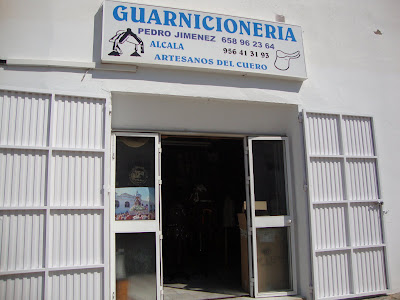
People who come to Alcalá on holiday aren´t exactly spoilt for choice when it comes to souvenirs.  There are no gift shops.  The Quesería Gazul sells excellent local cheese and honey, but for something more lasting you have to use your imagination.  Crazy really, we are in the heart of one of Europe´s biggest cork forests but you can´t even get a set of coasters. A good place to look is the Guarnicionería Pedro Jiménez , on the end of Calle Constitución.  Their main business is leather, mainly saddles and bridles, but the word guarnicionería comes from the word to garnish, and they also make all the trappings that are used to decorate horses and riders at ferias and equestrian events. Beautiful handmade leather bags, boots, hats, even key-rings are on sale alongside more startling hardware such as garrochas , the 3-metre poles used by mounted cowboys to bring down cattle.   You can also get leather goods repaired or refurbished, and he sells a w...

Sandias, Galias and Skin of Toad

Image
Victor, our local greengrocer It's the melon season.  The local shops are full to bursting with great green globes, rolling off the counters and piled up on the floor. Men with van-loads of them are knocking door to door. Little old ladies totter out of the greengrocer's with a carrier bag in each hand, containing watermelons that weigh almost as much as they do. Melons have been enjoyed by humans for at least 4,000 years.The Prophet Muhammad is reported to have said: "Whenever you eat fruit, eat melon, because it is the fruit of Paradise and contains a thousand blessings and a thousand mercies. The eating of it cures every disease." The word is probably derived from Melos the Greek Cyclades Island best known for the Venus de Milo). All melons come from the Cucurbitaceae family. They are closely related to cucumbers and squashes, but due to their sweetness they are used as fruits rather than vegetables. Apart from the watermelon, the many varieties around...

How now, red cow?

Image
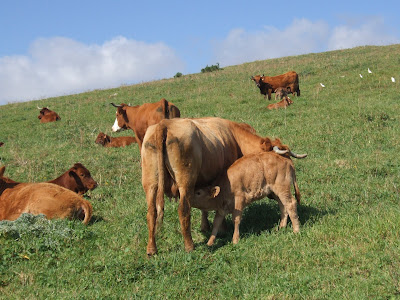
Alcalá is surrounded by cattle, and not just the scary great black toros bravos - fighting bulls - bred around Medina Sidonia and destined to face Death in the Afternoon. This land produces some of Spain's finest beef. Drive out in any direction and you will see large herds of reddish-brown beasts with huge white horns, peacefully grazing or being rounded up by mounted vaqueros . There is usually a flock of cattle egrets in attendance, and occasionally a tiny calf just finding its feet. These are the raza retinta , our own native breed, and they are very special. The word retinta refers to their colour, which can range from chestnut red to dark brown. The breed Bos taurus Turdetanus (I kid you not) probably originated in North Africa, but has been in the Iberian peninsular since ancient times and can be seen in cave drawings. Today it is found mainly in Andalucia and Extremadura, though there are small herds in other parts of Spain including the Balearics. Retinta cattle...

La Quesería Gazul: Alcalá's prizewinning cheeses

Image
  “Pan y queso saben a beso” [Bread and cheese taste like a kiss]   “Pan, queso y uva, saben a beso de cura” [Bread, cheese and grapes taste like a priest's kiss] (Alcalá children´s sayings, as recalled by Juan Leiva) Of the eighty or so cheese-producing dairies in Andaluc í a, fifteen are in the Province of Cádiz and our own  Quesería El Gazul  was recently identified as a model example of agricultural industry , combining traditional cheesemaking techniques with innovative products and helping to sustain the viability of Alcalá's numerous flocks of goats.  The regional government is keen to support such local businesses and help their products reach their full market potential. Local bigwigs inspect the cheese-making process Owner Jorge Puerto first had the idea of opening a dairy for goat milk products back in 1998.  Starting completely from scratch, it took four years to set it up.   All the products are made from the pa...

Vegetable matters

Image
I love my vegetables.  I love buying them, cooking them and eating them.  I used to love growing them too, but I'm restricted to herbs in pots these days as we don´t have a garden.  I did attempt some green peppers and tomatoes our first year here, but quite honestly it wasn't worth the effort of watering them twice a day.  In the UK we grew our own veg because they tasted better; that just doesn't apply here. People in Spain eat more fresh vegetables than in most other European countries (220 kg per person per year), and they cost less here too, especially if you buy them from local suppliers or street markets.  There are at least thirty shops in Alcalá (pop. 5,600) selling fresh vegetables, as well as a twice-weekly street market, and lots of people grow their own in huertos or parcelas, plots of land squeezed in between the buildings or perched precariously on the steep slopes around the edge of the town.   Vertical vegetable plot, Alcalá style...

Ponme unos huevos, por favor

Image
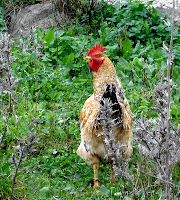
There must be a hundred cockerels in this town.  Early one morning I counted thirteen different cockadoodledoos, each one more distant than the last, as they sounded their unique territorial reveilles.  So there should be at least five hundred hens, scratching about in the huertos (little produce-gardens tucked in between buildings), or living on roof terraces, or even along the roadside. Other domestic fowl reside here too; we are occasionally held up while driving out of town by a half-dozen stately geese ambling across the road.  One house on the other side of town has turkeys roosting in the orange trees, and there are some strange-looking fat grey birds which may or may not be guinea-fowl, down near the waterworks. But when I popped out to get some eggs this morning, the first three shops I went in had none.  I was offered several excuses: The weather has been bad lately, they haven't been laying. Everybody is doing extra baking for the holidays. Th...

Rock 'n' toll

Image
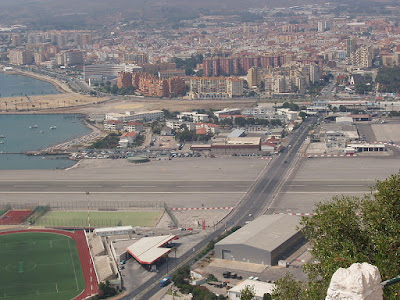
The Mayor of La Linea, Alejandro Sanchez, announced a few months ago that he intended to charge visitors leaving the British Overseas Territory of Gibraltar with a "congestion charge" toll of five euros (Gibraltar residents and the 7,000 Spanish citizens who work on the Rock would be exempt).   Sanchez, whose right-wing Partido Popular (Popular Party) have a majority on the council, says that the town reaps no financial benefit from the millions of visitors who stream across the border each year to shop for tax-free goods, fill up on cheap petrol, or admire the apes and the splendid views. La Linea, which means "The Line", straddles the section of Spanish coast to which the Rock is joined by a thin strip of land.  Looking at the number of vehicles which queue for an hour or more, engines running and pumping fumes and greenhouse gases into the Mediterranean air, you can almost sympathise.  But Sanchez is no Ken Livingstone and it is not concern for the environm...